When pests invade your home or business, the first question often is “What’s the safest way to deal with this?” That concern is understandable. You want to resolve the issue without risking your family, pets, employees or customers.
The reality is that safe and effective pest control doesn’t depend on one product or technique. It’s about finding the right mix of strategies suited to the specific pest, environment and people involved. The safest and most effective approach is rarely just one action and instead a thoughtful, well-managed plan meant for long-term protection.
Defining Safe and Effective Pest Control
In pest control, “safe” doesn’t mean no risk. It means reducing risk to people, pets and non-target species while still getting real results. A method that seems gentle but doesn’t control the infestation isn’t truly safe. If left unchecked, pest problems can worsen, leading to damage, contamination and greater disruption over time.
It’s important to understand that pest problems often create secondary risks. Rodents can contaminate food storage areas. Cockroaches and other pests can trigger allergies and asthma. Termites silently compromise structural integrity. That’s why true safety is about taking the right action. A balanced approach helps protect both your immediate environment and the long-term condition of your property.
“Effective” means going beyond just getting rid of visible pests. It includes identifying the root cause of the problem and implementing solutions that prevent future infestations. The safest strategy is one that addresses the issue thoroughly, preventing it from coming back. Modern pest management emphasizes careful planning instead of quick fixes — this is where Integrated Pest Management comes in.
The Integrated Pest Management (IPM) Approach
The gold standard in today’s pest control industry is Integrated Pest Management (IPM). IPM is a structured, eco-friendly framework that fuses multiple control strategies to manage pests responsibly and sustainably. Instead of relying on routine or broad product applications, IPM uses evaluation and precision to achieve lasting protection.
One of the strengths of IPM is that it avoids unnecessary product use. Treatments are applied based on evidence, not assumptions. That means no automatic spraying schedules or unnecessary over-application. Instead, decisions are made based on inspection findings, pest pressure levels and environmental conditions.
This measured approach helps protect your space while maintaining control over costs and environmental impact. A well-designed IPM program typically includes:
- Inspection: Identifying the pest, entry points and contributing factors
- Monitoring: Tracking activity patterns and intensity
- Prevention: Removing food, water and shelter sources
- Targeted product applications: Used only when necessary
- Evaluation: Adjusting the plan for continued protection
This process ensures that treatments are intentional and tailored to the specific setting. Professionals employ this integrated approach to offer balanced, effective protection for homes and businesses.
A Breakdown of Key Pest Control Strategies
An IPM plan works because it combines different strategies. Each serves a specific purpose in achieving effective results.
Prevention: Your First Line of Defense
Prevention is the safest pest control strategy because it reduces the need for reactive treatments. For homeowners and businesses, practical preventive steps include:
- Sealing gaps around doors, windows, pipes, and utility entries
- Installing proper weather stripping and door sweeps
- Removing standing water around the property
- Keeping food in sealed containers
- Keeping trash bins tightly closed
- Reducing clutter that can hide pests
These actions eliminate the food, moisture and shelter that pests rely on. Prevention boosts the effectiveness of any additional treatment by addressing the conditions that allow infestations.
Physical and Mechanical Controls
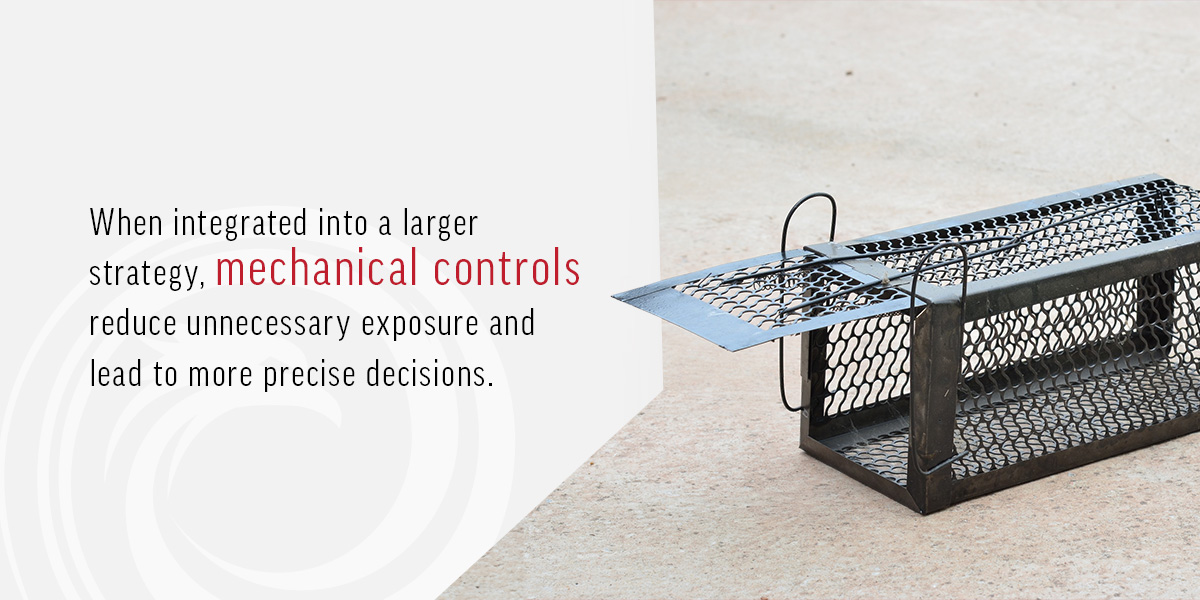
When pest activity is already present, physical and mechanical controls provide low-impact tools within an IPM plan. Rather than treating large areas immediately, these methods allow for targeted action and careful monitoring.
For example, rodent traps placed along known travel paths can reduce activity while also revealing where rodents are nesting or entering. Insect glue boards positioned in discreet areas help identify movement patterns and population levels. Even structural repairs, such as sealing gaps or reinforcing vulnerable entry points, play a direct role in limiting pest access.
When integrated into a larger strategy, mechanical controls reduce unnecessary exposure and lead to more precise decisions.
Professional Product Applications
When pests are established and signs are visible, targeted product applications may be needed. The key difference between effective and risky use lies in proper training and precision.
Many over-the-counter solutions fail not because they are completely ineffective, but because they’re used without full knowledge of pest biology. Different pests respond to different formulations and placement strategies. Applying the wrong formulation or the right one in the wrong place can delay effective control and prolong the infestation.
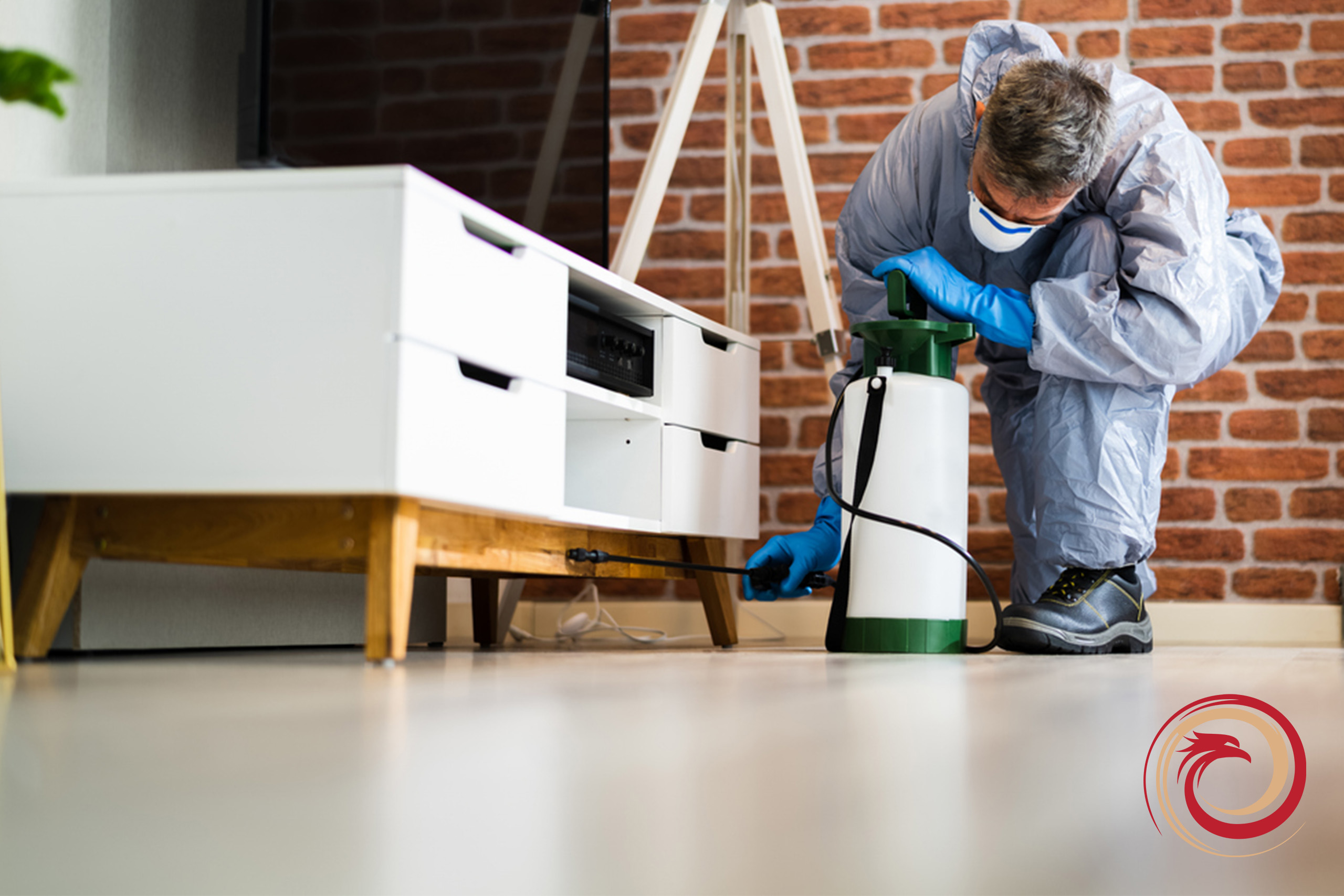
Licensed technicians know how to choose the right product for the specific pest and apply it only where needed. Instead of broad treatments, professional applications focus on strategic placement. Examples of targeted professional applications include:
- Enclosed bait stations
- Crack-and-crevice treatments
- Insect growth regulators
- Localized gel or dust placements
These solutions align with pest biology and behavior, allowing for effective control while minimizing unnecessary exposure. Professional products are EPA-registered and applied according to strict label directions and safety standards, providing peace of mind for families and business owners.
Why Professional Management Is the Safest Choice
Even with prevention and mechanical tools in place, long-term success relies on proper identification and careful oversight. In Arizona, local pests like scorpions, termites and rodents all have distinct patterns tied to seasonal changes and climate conditions. A local professional understands these patterns and anticipates activity before it becomes a larger issue. Different pests require different strategies. Treating the wrong issue or only addressing visible signs can lead to ongoing problems.
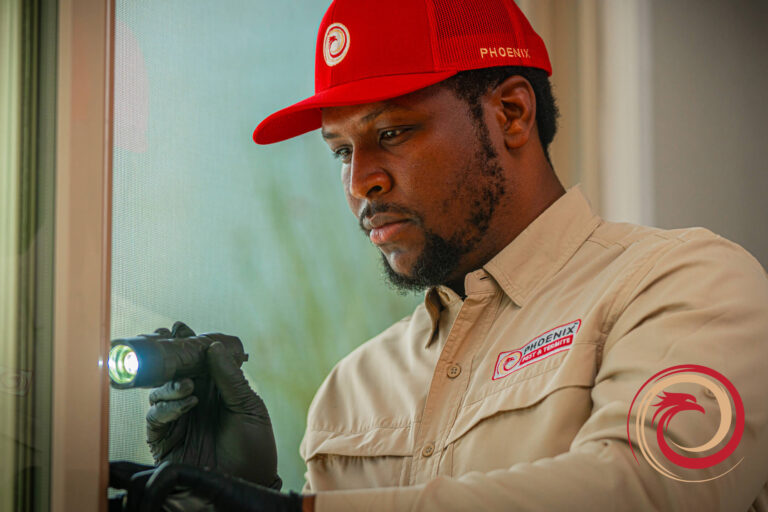
A professional inspection reveals crucial details such as:
- Entry points
- Moisture sources
- Hiding places
- Structural weaknesses
- Contributing environmental factors
By addressing these root causes, professionals create lasting solutions. Professional management also provides monitoring, documentation and plan adjustments as needed. Instead of guessing whether a treatment worked, you have a structured system designed to consistently and responsibly protect your property.
Start With a Professional Inspection from Phoenix Pest
The difference between temporary relief and lasting control comes down to professional insight and a customized pest management strategy.
Phoenix Pest & Termite has been protecting Arizona homes and businesses for over 60 years. Our licensed technicians combine prevention, monitoring and targeted applications to deliver reliable, long-term results that prioritize your safety.
If you’re ready for a solution based on expertise and precision, contact Phoenix Pest today to schedule your detailed inspection. Let our team create a customized protection plan that gives you lasting peace of mind.